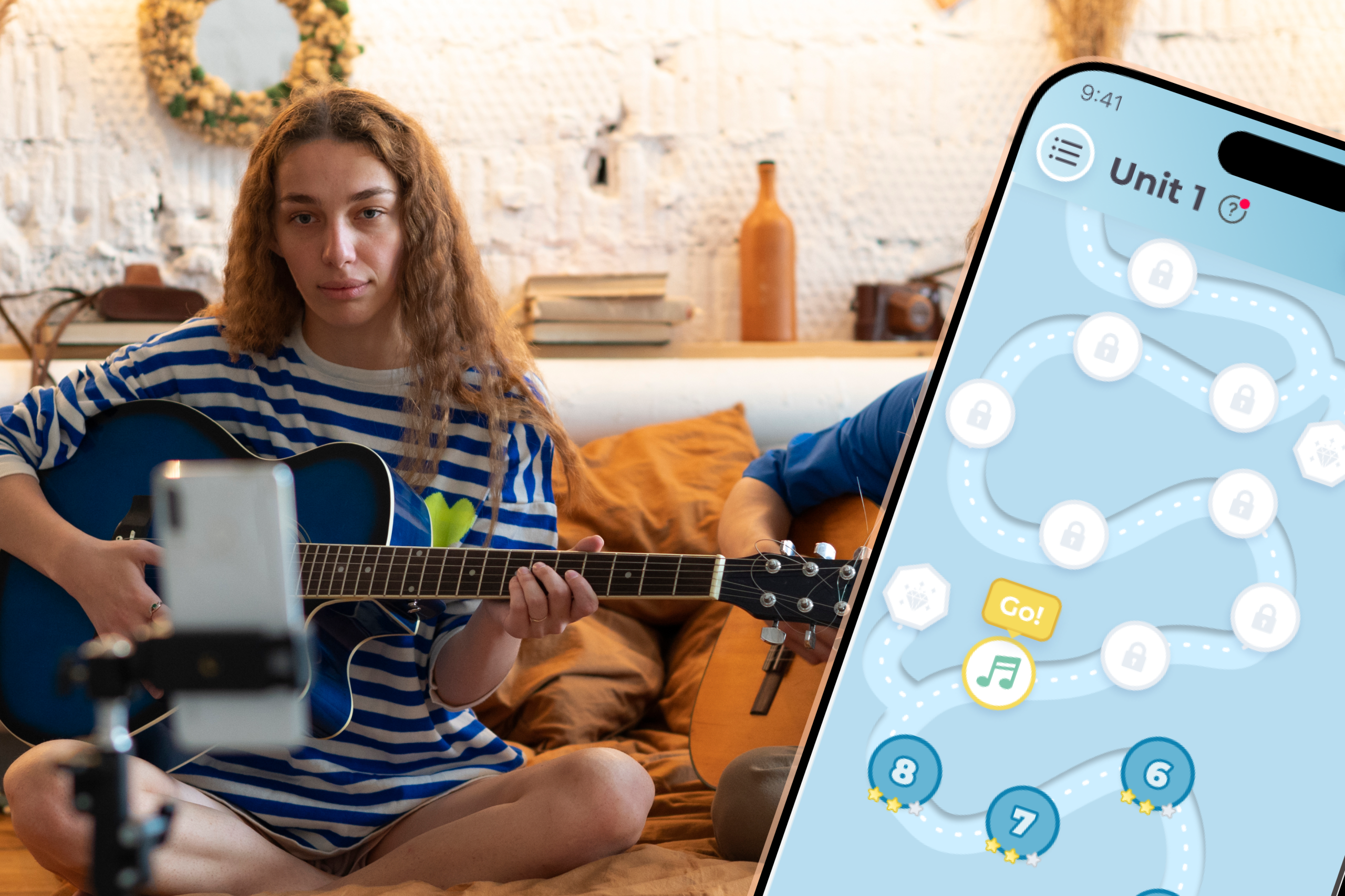
Introduction — why auditory learning was considered key for a long time
Auditory learning, the very foundation of mastering music and languages, is a time-tested method—literally shaping musical and speech hearing. Well we understand, as developers of a music education app, why the ability to perceive sound “on the fly” was initially perceived as the main step toward acquiring a new skill.
Why was that the case? Several reasons include:
- Naturalness of the process: since birth, a person becomes accustomed to perceiving and distinguishing sounds before he memorizes and reproduces them.
- Hearing ability — key to understanding: without developed hearing, it is impossible to reproduce a melody or intonation precisely.
- Direct contact with the material: sound perception facilitates the association of sound and emotional context.
It is fundamental, one could say, auditory learning — upon which more complex skills are built. It was only with an instrument and the requirement to “listen and repeat” that traditional methods placed the student, teachers once.
However, both it and our possibilities change with time. Though classically effective, today new challenges stand before us, meaning that the role of listening in education has to be reevaluated. In practice, this revolves around ear training, traditional methods, guided listening, improvisation drills, and the Talented app.
Many top piano apps for beginners now pair aural learning with critical listening, transcription drills, and interval exercises to accelerate ear development and listening skills.
Modern challenges of classical listening in language learning
When today there is instant access to information and the pace of life is frantic, a number of difficulties classical auditory learning begins to face.
- Limited control over the process. One-directional is traditional listening: you listen but can’t always adapt the material to your needs, skip the difficult parts or repeat fragments without loss of natural perception.
- Monotony and ear fatigue. Prolonged focused listening without interactive elements wears a person out, reducing motivation and effectiveness.
- Lack of instant feedback. Difficult it is to understand exactly where perception error arises without hints and analysis.
- Difficulty integrating with modern digital formats. Truly static audio materials most often don’t allow any flexible interaction with the content.
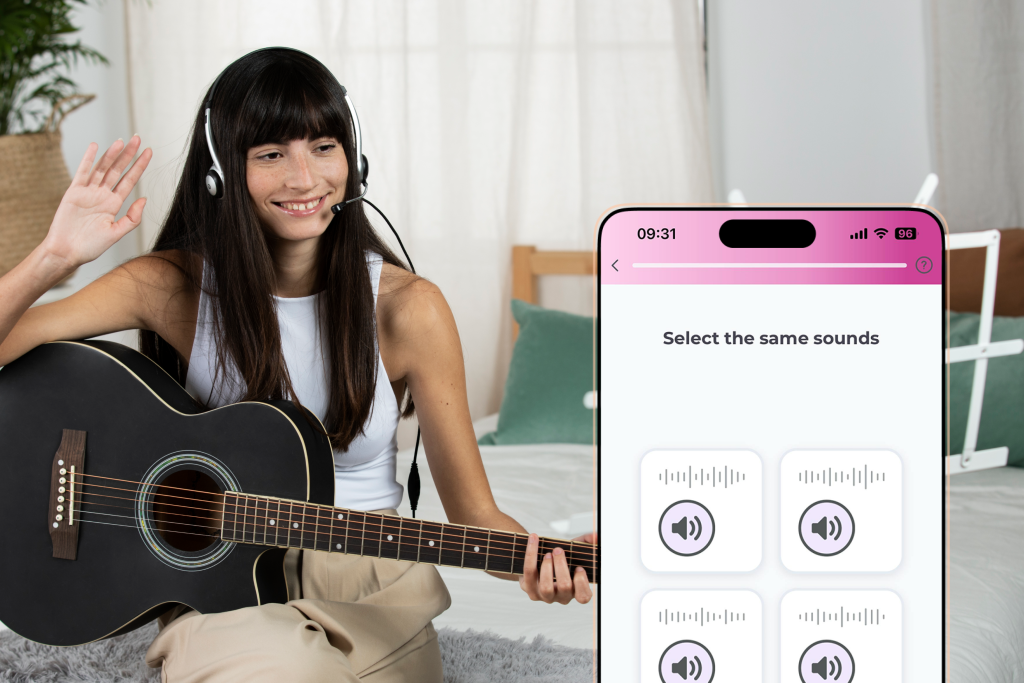
Problem–solution table
| Problem | Consequences | What new generation apps offer |
| Lack of flexibility | Time loss, decrease of motivation | Personalization and adaptation to learner’s level |
| Monotony and fatigue | Concentration drop | Variety of formats — quizzes, games, instant checks |
| No real-time feedback | Difficulties with self-monitoring | Automatic performance analysis and hints |
The classical method is very reliable, but it does need modernization in order to meet all the demands of today’s user. That’s where innovative tools come into play, skillfully mixing proven experience with new technologies and turning the learning process into an engaging and effective activity through aural feedback and a traditional complement to listening practice.
Next-generation applications — how Talented changes the approach to listening perception
It is in the era of digital technologies that new colors have been acquired by listening education through innovative applications like Talented. Not only does the tool offer users standard audio materials, but the very process of information perception is changed by it: now it is interactive and adaptive.
The main features of Talented, changing the traditional approach:
- Adaptive repetition. Mistakes made by the user are analyzed and the difficulty level of the application is adjusted, repeating words and phrases that are problematic for perception.
- Audio contextualization. Instead of isolated sentences, learning is based on dialogues and actual situations to properly understand the meaning of what is heard.
- Built-in speech analysis. The possibility to record one’s own answers and receive automatic feedback on pronunciation and intonation.
- Interactive activities. Embedded assessments, activities to identify main ideas, and fill-in-the-blank activities within the text engage students in active listening.
Such an approach transforms passive listening into a dynamic process of the learner’s constant participation in a dialogue with the material, noticeably increasing the effectiveness of perception—linking ear modules, harmonic awareness, melodic hearing, and skill synergy within the Talented app.
Synergy of technologies and traditional methods — examples of effective combination
New technologies combined with the classics—the key to creating a deeply developed skill of listening perception is. Simple the principle here is: technology strengthens and complements tradition without replacing it. Especially well the synergy works in the following main directions:
- Hearing training with Talented + reading texts
It helps one learn the connection between spoken words and their visual form by listening to dialogues in the app while following the text at the same time. - Public speaking and recordings of own answers
The recording feature in Talented supplements classical lessons with a teacher, providing the opportunity to analyze pronunciation at home. - Classical audio and video materials and interactive “live” tasks
Listening to the language speakers, further interactive exercises on the site help to enhance the understanding and develop attention to details in the language. - Dialogue practice in pairs and individual training with the app
Such a combination develops both passive and active skills and turns one-sided listening into full communication.
In summary, technologies such as Talented do not displace traditional teaching methods but create with them a powerful symbiosis that allows listening, understanding, and reacting to be done with much greater accuracy and confidence. This guided listening acts as improvisation support for improv guidance and listening practice.
The future of auditory learning — trends and development prospects
In the future, the traditional way of radio listening will not disappear but will definitely transform under the influence of new technologies and changes in user needs. Not just a passive sound perception is listening: an active process it is, developing alongside learning tools.
Which directions set the trends in the development of auditory learning?
- Individualization and adaptability
Algorithms are getting smarter, adapting to each one’s level, interests, and speed of absorption. Such personalization enables learners to work with materials that are most useful and motivating to move forward. - Integration of multimodal data
Modern solutions are not restricted to sound only. Video sequences, texts, subtitles, interactive tasks — everything creates a rich context for better understanding and remembering speech. The brain processes information more efficiently when different perception channels are involved. - Real immersion and imitation of live communication
Virtual and augmented reality are gradually entering the realm of language education. They simulate live conversation; they let one not be afraid of mistakes and train speech perception in unusual conditions, which is so important for hearing development. - Social components and gamification
Joint learning, contests, challenges, rating, and rewards support motivation and make the process less monotonous.
What does this give us? First of all, new opportunities for creating intuitive and efficient applications that perfectly complement classical courses and lessons with teachers. Instead of competing with traditional methods, technologies become their faithful allies. The future of auditory learning is this—evolution in which human and machine work together, enriching experience and opening new horizons for ear development and harmonic awareness within ear training and improvisation drills.
Conclusion — is learning by ear dead, or is it evolving?
Not dying but transforming, learning by ear—to listen with attention, understand, and interpret—is. Corrections the digital era brings, shaping traditional methods of speech perception at a new level. Let me summarize and give emphasis to some key points that enable seeing auditory learning through modern eyes.
New forms and possibilities learning by ear acquires, not only surviving. It retains its foundational role in language study by becoming flexible, personalized, and interactive. Traditional methods remain as a traditional complement to ear modules and listening practice in the Talented app, while guided listening and improvisation drills add improv guidance and aural feedback to the learning journey.
Leave a Reply
You must be logged in to post a comment.